Jack Boss vs Yellow Jacket Floor Jack: Which Is Better? (November 2026)
In Jack Boss vs Yellow Jacket, choose Jack Boss for general garage use with a two-piece handle, or Yellow Jacket for its foam handle bumper and load-limiting device. Vehicle fit is equal: both offer a 3 ton capacity and the same lift range.
On this page (11 sections)
- Jack Boss vs Yellow Jacket: what actually changes?
- Which jack fits your vehicle's clearance?
- How much capacity and lift height do you need?
- How do the pumps and handling compare?
- What should you check before the first lift?
- What do the saddle, handle and warranty add?
- What mistakes should you avoid during a lift?
- How should you care for either floor jack?
- When is the lighter BIG RED a better choice?
- Related floor jack guides
- Jack Boss vs Yellow Jacket: which should you buy?
In Jack Boss vs Yellow Jacket, choose Jack Boss for general garage use with a two-piece handle, or Yellow Jacket if a foam handle bumper and load-limiting device matter more. Neither has an advantage in rated capacity, starting clearance or maximum reach.
The useful decision is about your routine: where the jack will live, how you'll position it and whether your vehicle needs more clearance or height than either offers. A badge that says “low profile” cannot settle those questions.
 Best for general garage use
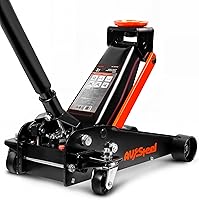
Jack Boss 3 Ton Aluminum and Steel Racing Floor Jack
 Best for tight handle clearance
Yellow Jacket 3 Ton Aluminum and Steel Floor Jack
Jack Boss vs Yellow Jacket: what actually changes?
Handle features and overload provisions separate these jacks more than their lifting ability. Jack Boss has a two-piece handle, while Yellow Jacket adds a padded handle and a side handle for positioning.
Jack Boss combines an aluminum body with a welded steel frame. Yellow Jacket also uses aluminum and steel, so neither should be treated as an easy-carry tool just because aluminum appears in its name.
Their shared essentials are a 3 ton capacity, a 3-15/16 to 18-5/16 in lift range and a dual-piston pump. Those matching figures put them in the same starting group for vehicle fit.
Jack Boss says its factory overload check reaches 4.5 tons, or 1.5 times its rated capacity, and that it meets ANSI/ASME PASE standards. Yellow Jacket says its load-limiting device activates under overload and that it meets ANSI/ASME safety standards.
These are different provisions, not evidence that either jack can lift beyond its working limit. Choose capacity before comparing extras.
Who should choose Jack Boss over Yellow Jacket?
Choose Jack Boss for a jack that stays in your garage, rolls to the vehicle and stores with its handle separated. Its two-piece handle is useful when the assembled handle would block a shelf or storage corner.
It suits a buyer whose vehicle already falls within the shared lifting limits and who doesn't need a padded handle as a deciding feature. Its higher editorial score does not guarantee a safety advantage.
Skip it if you regularly carry tools up stairs, load them into a trunk or need extra reach for a tall vehicle. Those needs call for a different weight or lifting range.
Who should choose Yellow Jacket over Jack Boss?
Choose Yellow Jacket when handle contact near bodywork is a concern and you want a side handle for small positioning adjustments. The foam bumper provides a cushion, but you still need room to operate the handle without striking the vehicle.
Its load-limiting device is another reason to prefer its feature set. Plan the lift within the rated capacity rather than relying on that device to tell you when the load is excessive.
Skip it if you're hoping it will fit lower cars or lift higher than Jack Boss. The shared range rules out either advantage.
Which jack fits your vehicle's clearance?
Both need the same starting clearance, and the whole path to the approved lift point must be clear. Measuring beneath a bumper alone won't tell you whether the saddle can reach its target.
Park on the surface you'll use for maintenance, then measure with the vehicle resting normally. Check any side skirt, underbody panel or crossmember along the jack's approach.
The saddle is only one part of the jack passing beneath the vehicle. A low lifting point can still be inaccessible if nearby bodywork blocks the frame or prevents useful handle movement.
Allow working room rather than planning around a measurement that barely matches the minimum. Tire condition, loading and the slope of the approach can change available clearance.
For help matching the tool to your vehicle, read what size floor jack you need. Our explanation of what a low-profile floor jack is also covers why a low saddle does not guarantee access.
If neither fits, choose a more suitable jack rather than forcing the approach. For maintenance that can keep the wheels installed, car ramps for low cars may offer another route.
How much capacity and lift height do you need?
Choose capacity from the vehicle's lifting requirements and height from the planned job. A jack that slides underneath can still run out of travel before the vehicle reaches a useful support position.
Use your vehicle manual to identify approved jack points and any equipment requirements. Don't assume the jack carries exactly one-quarter of the vehicle's weight when lifting a corner.
A front or rear lifting point can place a substantial share of vehicle weight on the saddle. Added cargo also changes the load, so avoid choosing equipment around an uncertain estimate.
Height needs depend on what you're doing. Removing a wheel requires the tire to clear the ground, while placing stands requires enough room to position them at approved support points.
Suspension movement can consume part of the jack's travel before a wheel lifts. A tall vehicle may therefore need more reach even when the jack's capacity is suitable.
Skip both main picks if your required lifting or support setup exceeds their limits. Our best 3 ton floor jacks guide compares alternatives, while best floor jacks for a home garage covers a broader shortlist.
How do the pumps and handling compare?
Neither has a documented pumping-speed advantage, because both use dual-piston pumps and no comparable stroke count is available here. Buy for fit and handling rather than assuming one will raise the vehicle faster.
Jack Boss weighs 58.5 lb and Yellow Jacket weighs 58.6 lb. That difference has no useful bearing on carrying, so plan to roll either across a suitable garage floor.
Think about the route from storage to the vehicle. Steps, gravel and raised thresholds can turn a short move into a lifting task that wheels cannot solve.
Yellow Jacket has 2 universal casters and 2 front rollers, plus its side handle. These help you position the jack, but a side handle does not make a heavy tool comfortable for everyone to carry.
Leave room for the jack to roll as its lifting arm moves. Don't trap its wheels against an obstruction or try to shift the jack sideways once it carries the vehicle.
For the distinction between common wheeled jack designs, see trolley jack vs floor jack.
What should you check before the first lift?
Read both manuals, inspect the jack and plan the support points before raising the vehicle. Finding a suitable stand location after the car is in the air is poor preparation.
Confirm the jack's model and rated capacity, then follow its instructions for assembly and initial preparation. Fit the handle as directed and learn the release control before placing a load on the saddle.
Inspect for leaking fluid, bent parts, damaged wheels and loose components. Stop if anything appears damaged or if the jack does not operate as its manual describes.
Some hydraulic jacks require an air-purge procedure during setup or after transport. Follow the exact model's steps; our guide to how to bleed a floor jack explains the purpose of that process.
Prepare a hard, level surface, set the vehicle's parking controls as directed and chock the wheels that remain on the ground. Have suitable stands ready before starting.
Keep the area clear of children, pets and loose tools. You should be able to see the saddle contact and reach the handle without putting any part of your body beneath the vehicle.
What do the saddle, handle and warranty add?
Both have rubber saddles; Yellow Jacket also has a foam handle bumper. These features help limit contact damage, but they do not make every underbody surface suitable for lifting.
Center the saddle on the vehicle's approved point and use any adapter required by the vehicle and jack instructions. Rubber alone does not replace a required pinch-weld or other vehicle-specific adapter.
Keep the saddle clean enough to inspect its contact surface. Oil, grit or damaged padding deserves attention before the next lift.
Jack Boss provides a limited 1-year manufacturer warranty, and Yellow Jacket provides a 1-year manufacturer warranty. Read the terms for use, maintenance and the claim process rather than treating equal length as equal coverage.
Keep the receipt, model details and manual together. That makes it easier to find the correct instructions or request support later.
What mistakes should you avoid during a lift?
Never work beneath a vehicle held only by a hydraulic jack. Transfer the load to properly rated stands at approved support points before reaching underneath.
A jack point and a stand point may serve different roles. Confirm where each tool belongs so the jack does not occupy the only usable support location.
Raise the vehicle slowly enough to watch the contact and wheel movement. If the saddle shifts, the jack tilts or anything binds, stop and lower the vehicle safely before correcting the setup.
Don't add loose blocks, stack adapters or improvise saddle extensions to gain height. Choose equipment that reaches the required position using approved accessories.
Keep your hands away from the lifting arm and other pinch points. Never use the handle as a carrying lever while the jack supports a load.
Plan the lowering step too: clear the area, follow the release instructions and lower in a controlled way. Avoid abrupt handle movements that could drop the vehicle faster than intended.
If you're choosing support equipment alongside the jack, our best jack stands for cars guide can help build a suitable shortlist. Check the stand maker's capacity-labeling instructions before use.
How should you care for either floor jack?
Keep it clean, inspect it before use and follow its manual for hydraulic service and lubrication. Routine checks help you catch problems before loading the jack.
Wipe dirt from the saddle and wheels after use, especially if debris could interfere with rolling. Store the jack as its manual directs, in a dry place where the handle won't become a trip hazard.
Use only the hydraulic fluid specified for the model. Don't substitute another automotive fluid or add oil simply because the jack is slow to rise.
Failure to reach height, erratic movement or drifting under load calls for stopping use and following the service instructions. Repeated pumping is not a repair.
Don't adjust overload components or other factory-set controls to gain capacity. If a fault persists after permitted maintenance, contact the manufacturer or an appropriate repair service.
When is the lighter BIG RED a better choice?
Choose BIG RED when carrying matters and its lower capacity suits the job. It weighs 31.5 lb, has a side handle and lifts from 3.5 to 14 in with a 1.5 ton capacity.
Its lower starting position may solve a clearance problem that the main pair cannot. Check the shorter reach just as carefully, especially if you need space to place stands.
The aluminum and steel construction includes a foam handle bumper and a knurled handle. Those features suit a portable garage tool, but carrying convenience cannot make up for insufficient capacity.
Skip it for any job that requires the main pair's higher working limit or greater reach. A lighter jack is useful only when it can complete the planned lift within its own limits.
Our BIG RED floor jack review offers another brand option to compare. Match model numbers and specifications carefully because jacks sold under one brand can serve different jobs.
Related floor jack guides
Compare materials and support methods if neither jack fits your routine. These guides cover the next choices without making brand name the deciding factor.
- Best Floor Jacks for a Home Garage
- Best 3 Ton Floor Jacks
- Aluminum vs Steel Floor Jacks
- BIG RED Low Profile Aluminum and Steel Racing Floor Jack Review
Jack Boss vs Yellow Jacket: which should you buy?
Buy Jack Boss for general garage use with convenient handle storage; buy Yellow Jacket for its padded handle and side positioning handle. Choose BIG RED instead only when frequent carrying outweighs the need for the larger jacks' capacity and reach.
Before ordering, write down your vehicle's approved lifting point, approach clearance and required support height. If either main jack meets all three needs, choose the handling features you'll use each time you lift.
If neither meets those needs, expand the shortlist rather than compromising the setup. Start with our home garage floor jack guide, or compare ramps and jack stands if the job allows a different support method.
Frequently asked questions
Is Jack Boss or Yellow Jacket the better floor jack?
Jack Boss is the general garage choice here, while Yellow Jacket suits buyers who want a padded handle and load-limiting device. Their capacity, lift range and pump type match, so neither solves a vehicle-fit problem that the other cannot; choose after checking your lifting points, required height and storage space.
Do Jack Boss and Yellow Jacket have the same lifting range?
Yes, both lift from 3-15/16 in to 18-5/16 in; measure at the approved lifting point and check the whole approach beneath the vehicle, including nearby bodywork. Maximum saddle height also needs to allow the planned support setup; suspension movement can use some of that travel before a tire clears the ground.
Does Jack Boss's higher editorial score mean it is safer?
No, an editorial score is not a safety certification or a measured comparison of failure risk; Jack Boss scores 8.8 and Yellow Jacket scores 7.6 here, but safe use still depends on correct capacity, sound equipment, approved lifting points and proper vehicle support. Never work beneath a vehicle supported only by a hydraulic jack.
Is the BIG RED jack an alternative to these 3 ton jacks?
Yes, but only for jobs within its 1.5 ton capacity and 3.5 to 14 in lift range; its 31.5 lb weight makes carrying easier than with either main pick. Skip it if your vehicle's lifting requirements exceed those limits, even when its lower starting height would fit.