BIG RED 3 Ton Torin Service Jack Review: Worth It? (November 2026)
This BIG RED floor jack review recommends the T83006 for higher vehicles that fit its capacity and clearance limits. Choose it for lifting reach and easier carrying; choose a lower-profile alternative when access beneath the vehicle is the main concern.
On this page (9 sections)
- What does this BIG RED floor jack review recommend?
- Which measurements decide whether it fits?
- Will the BIG RED fit beneath a low car?
- Which alternative suits your vehicle better?
- How should you set up the T83006 before its first lift?
- What matters most while lifting and lowering?
- Which common mistakes should buyers avoid?
- How should you care for and store the jack?
- What is the final decision in this BIG RED floor jack review?
This BIG RED floor jack review recommends the T83006 for higher vehicles, provided its clearance and capacity suit the job. It offers useful lifting reach without the carrying weight of the other jacks compared here.
Low-car access is its main drawback. Before buying, measure the approved lift point and the path beneath the vehicle, then check whether the jack can raise it enough for your planned work.
What does this BIG RED floor jack review recommend?
Choose the T83006 when reach matters more than low clearance. Its steel construction, extra long saddle neck, and carrying handle make it worth considering for a home garage serving taller vehicles.
BIG RED Trolley Floor Jack with Extra Saddle: Best for higher vehicles
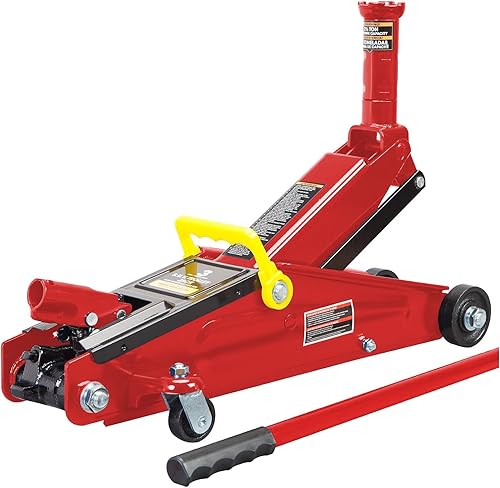
- 3 ton capacity
- 5-7/8 to 20-7/8 in lift range
- Extra long saddle neck
- Steel construction
Choose the T83006 when lifting reach and carrying weight matter more than low-car access. Its extra long saddle neck suits higher lift points, but clearance still needs a careful check.
Pros
- Maximum height reaches 20-7/8 in
- Extra long saddle neck
- Built-in carrying handle
- Safety bypass system
Cons
- Too tall for some low lift points
- Single piston pump
The jack uses a single piston quick lift pump, with 2 large steel casters and 2 swivel casters for positioning. BIG RED includes a safety bypass system and backs it with a limited 1-year manufacturer warranty.
The saddle neck is especially relevant if your approved lift points sit high off the ground. BIG RED says it saves time when lifting higher vehicles, though actual handle strokes depend on the starting height and load.
BIG RED floor jack review: who should buy it?
Buy it if your vehicle clears the jack and needs its extra reach, especially when you must carry the jack out of storage. A higher saddle can be useful when suspension travel takes up part of the lift before a tire leaves the ground.
Skip it for a low car that leaves little approach room, or any vehicle whose lifting requirements exceed the jack's limits. If your household has several vehicles, check each one separately rather than assuming one successful fit covers them all.
The best 3 ton floor jacks guide provides a broader comparison if you need one jack for a mixed garage.
Which measurements decide whether it fits?
Check capacity, access, and useful lifting height before comparing convenience features. A jack can meet one requirement and fail another.
| Floor jack | Rated capacity | Lift range or access detail | Weight |
|---|---|---|---|
| BIG RED Trolley Floor Jack with Extra Saddle | 3 tons (6,000 lb) | 5-7/8 to 20-7/8 in | 36 lb |
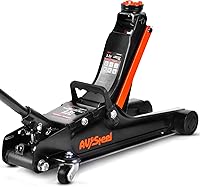
| AV Steel 3 Ton Single Piston Floor Jack | 3 tons (6,000 lb) | 5.5 to 18.5 in | 63.9 lb |
| ARCAN A20003 3 Ton Steel Low Profile Floor Jack | 3 tons (6,000 lb) | Low profile frame; confirm 7.5 in minimum | 76.8 lb |
| Jack Boss 3 Ton Aluminum and Steel Racing Floor Jack | 3 tons | 3-15/16 to 18-5/16 in | 58.5 lb |
Start with the vehicle manual's lifting instructions. Don't choose capacity by dividing vehicle weight in half, since the load at a lift point depends on the vehicle and the approved lifting method.
Next, measure at the actual lift point. Ground clearance beneath a bumper or door sill doesn't tell you whether the saddle can reach the correct spot.
Finally, consider the repair. A tire change needs wheel clearance, while placing stands requires enough height to position them correctly and lower the vehicle onto them.
The maximum saddle height is measured from the floor. It isn't the amount the body rises or the clearance you'll gain beneath a tire.
Will the BIG RED fit beneath a low car?
Choose a lower-profile jack if the BIG RED cannot reach the lift point without contact. Don't force it beneath an undertray, exhaust part, or side skirt.
Measure the full approach path with the vehicle resting normally. Include any vehicle-specific adapter in the clearance check, because it adds height above the saddle.
Also consider a flat tire if roadside wheel changes are part of your plan. The lift point may sit lower with a deflated tire than it does during a routine garage check.
A low saddle alone doesn't guarantee access to an inward lift point. The jack's frame must also pass beneath the car far enough to center the saddle correctly.
Compare the best low profile floor jacks if access is tight. Keep enough clearance to position the jack without scraping or loading nearby bodywork.
Which alternative suits your vehicle better?
Choose the Jack Boss for low access, the AV Steel for standard vehicles within its range, or the ARCAN for a garage where carrying weight matters less. Each has a reason to consider it beyond matching the BIG RED's capacity class.
AV Steel: for standard vehicles and floor-level storage
The AV Steel suits standard cars, SUVs, minivans, and pickups that don't need the BIG RED's extra reach. Its rotatable saddle and rear rotating wheels help with positioning in a garage.
Its minimum height is only slightly lower than the BIG RED's. That small difference may solve a close fit, but it isn't a strong reason to choose it for a genuinely low car.
Skip it if you need to carry the jack frequently or lift a vehicle outside its intended fit. AV Steel specifically excludes lifted vehicles, heavy-duty trucks, and RVs.
The AV Steel floor jack review explains those fit limits in more detail.
ARCAN: for a permanent garage work area
The ARCAN suits buyers who can roll the jack from storage to the vehicle. High carbon steel side plates reinforce its chassis, while wiper seals help keep dirt away from internal hydraulic components.
Wide front wheels, ball bearing rear casters, and a long handle are useful features for positioning and controlled operation. They don't remove the need for a clean floor or correct saddle placement.
Confirm its clearance before buying for a low car. ARCAN describes a low profile frame, but the stated minimum height needs clarification, and a verified maximum height is also needed for a full fit check.
Skip it if easy carrying or a clearly established low-car fit is your priority. Read the ARCAN A20003 review before choosing it on the frame description alone.
Jack Boss: for low lift points and repeated lifting
The Jack Boss is the strongest alternative here when the BIG RED is too tall to enter. It combines an aluminum body with a welded steel frame and includes a rubber saddle and two-piece handle.
Its dual piston pump reduces the pumping needed to reach working height. That feature becomes more useful when you're repositioning the jack for several separate lifts.
The rubber saddle still needs to match the vehicle's approved contact point. It doesn't replace a required pinch-weld or vehicle-specific adapter.
Skip it if your main need is the BIG RED's higher reach. Also plan storage carefully, since aluminum construction doesn't make this jack light enough for effortless carrying.
How should you set up the T83006 before its first lift?
Read both manuals, inspect the jack, and prepare a firm, level work area before placing it beneath a vehicle. Set the stands and wheel chocks within reach so you aren't searching for them after lifting begins.
Check for visible damage, loose parts, oil leakage, and wheels that bind. Assemble the handle and complete any initial hydraulic preparation exactly as BIG RED directs.
Air in a hydraulic system can cause uneven movement or incomplete lifting. Use the manual's bleeding procedure if required, rather than guessing which screw or plug to loosen.
With the jack unloaded, check its lifting and lowering action according to the instructions. Make sure you understand the release control before it carries a vehicle.
Park and secure the vehicle as its manual directs, then chock the wheels that remain on the ground. Clear tools and debris from the jack's rolling path.
Center the saddle beneath the approved point and raise it slowly into contact. Stop if the saddle shifts, an adapter tilts, or nearby trim starts taking the load.
What matters most while lifting and lowering?
Keep the load centered and the jack free to roll as intended. A trolley jack's lifting arm moves through an arc, so its position may change as the saddle rises.
Never hold it in place by blocking its wheels. If the floor prevents smooth movement, stop and correct the setup before continuing.
Raise the vehicle only as far as needed for the job and approved stand placement. Watch the lift point throughout the movement, keeping hands clear of pinch areas.
The bypass system helps protect against overload, but it cannot correct a poor lift point, soft ground, or an unstable vehicle. Stop immediately if the jack leans, shifts unexpectedly, or fails to lift normally.
Never get beneath a vehicle supported only by hydraulics. Transfer the load to correctly rated stands at approved support points, following all instructions before starting work.
Plan the lowering sequence before removing support. Clear people and tools, lift only enough to unload the stands, and lower slowly using the release control as directed.
The guide to how many jack stands you need helps you plan support around the work you intend to do.
Which common mistakes should buyers avoid?
Avoid choosing by vehicle type alone. Two SUVs can have different lift points, suspension travel, and support requirements, so “fits SUVs” isn't a complete fit check.
Don't use loose wood, bricks, or improvised saddle extensions to solve a height problem. Choose equipment that reaches correctly and use only accessories approved for that jack and vehicle.
Don't adjust an overload valve to make a jack lift more. A jack that cannot perform the required lift within its rating is the wrong tool for that job.
Avoid gravel, sloped driveways, and soft surfaces that let wheels sink or bind. If you lack a suitable work area, solve that problem before planning a repair beneath the vehicle.
Don't assume a jack can substitute for stands during a quick job. Hydraulic support can fail or lose height, and a short repair still requires proper support.
Finally, check handle room before loading the jack. The BIG RED's 24.5-inch handle needs space to move without hitting shelves, walls, or another parked vehicle.
How should you care for and store the jack?
Keep the jack clean, dry, and inspected, with lubrication and hydraulic service performed as its manual directs. Good storage also makes damage and leaks easier to spot before the next lift.
Wipe dirt from exposed areas and remove debris from the wheels. Inspect the saddle, handle connection, and accessible hardware before use, especially after moving the jack between locations.
Use only the hydraulic fluid type specified for the jack. The guide to floor jack oil explains the category, but the jack's own instructions control fluid choice and filling.
If lifting becomes spongy or travel is incomplete, remove the jack from service until the cause is resolved. Don't keep pumping beneath a vehicle while trying to diagnose the problem.
Store it unloaded with the saddle fully lowered, following the manual's handle and release-valve directions. A dry floor-level spot avoids unnecessary lifting onto shelves and keeps the jack ready to roll into position.
What is the final decision in this BIG RED floor jack review?
Choose the T83006 for a higher vehicle that fits its approach height, especially if moving the jack in and out of storage is part of every job. Choose the Jack Boss when low access is the deciding issue.
The AV Steel fits standard vehicles when its shorter reach is enough. Consider the ARCAN for a permanent garage setup after confirming its usable height range.
Before ordering, write down your lift-point clearance, required working height, and storage route. Those checks turn this BIG RED floor jack review into a choice based on your vehicle and repair plans.
For a clearer picture of the lifting sequence, read how a floor jack works before setting up your jack and stands.
Frequently asked questions
Is the BIG RED T83006 a 3 ton floor jack?
Yes, the BIG RED T83006 has a rated capacity of 3 tons, or 6,000 lb. Match that rating to the vehicle maker's lifting requirements rather than guessing from vehicle size, and check clearance, approved lift points, and required lifting height before choosing it.
How high does the BIG RED floor jack lift?
The T83006 lifts from 5-7/8 to 20-7/8 inches. That range describes saddle height, not how far a tire will rise, because suspension movement affects wheel clearance; also check that the vehicle can reach the height needed for correctly positioned stands without exceeding the jack's travel.
Will the BIG RED T83006 fit a low car?
Choose it only if the approved lift point and approach path clear its minimum saddle height. A low bumper, undertray, or side skirt can block access even when the lift point itself sits higher, so measure the full route and allow for any required adapter.
Can I work under a vehicle held by a floor jack?
Never work under a vehicle supported only by a floor jack. Transfer the load to correctly rated jack stands at approved support points on a firm, level surface, following the vehicle, jack, and stand instructions, and keep clear until the vehicle is securely supported.