Aluminum vs Steel Floor Jack: Which Is Better? (November 2026)
In the aluminum vs steel floor jack choice, favor aluminum for frequent carrying and steel for a jack that stays in your garage. Check capacity, clearance and lift height first.
On this page (10 sections)
- Aluminum vs steel floor jack: which should you choose?
- What changes when you choose aluminum instead of steel?
- How much capacity do you need before comparing materials?
- Which measurements decide whether a floor jack fits?
- What do these three floor jacks offer?
- Does steel last longer, and how should you care for either material?
- How should you set up an aluminum or steel floor jack?
- Which common buying and use mistakes should you avoid?
- Would another lifting tool suit your workspace better?
- Aluminum vs steel floor jack: the final decision
Aluminum vs steel floor jack: which should you choose?
Choose aluminum for frequent carrying and steel for a jack that stays in your garage. Your aluminum vs steel floor jack decision should start with vehicle fit, then account for how you move and store the tool.
The SATA suits buyers who want aluminum construction in a larger capacity class. The ARCAN suits a fixed garage workspace, while the BIG RED offers a lighter mixed-material option for loads within its smaller rating.
None is the right choice just because of its frame material. A jack must reach the approved lift point, handle the planned load and raise the vehicle far enough for the job.

 Best for dedicated garage bays
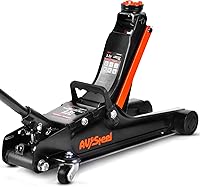
ARCAN A20003 3 Ton Steel Low Profile Floor Jack
What changes when you choose aluminum instead of steel?
Carrying effort is the main reason to favor aluminum, but actual weight matters more than the material name. A heavy jack that rolls easily can still be awkward to lift over a trunk lip or garage step.
Aluminum generally allows lighter construction and resists rust, though it still needs dry storage and routine care. Steel can suit a jack that travels only a few feet across a smooth garage floor.
Mixed-material jacks sit between those categories. Their usefulness depends on which parts use each material, the finished weight and the jack's capacity.
Aluminum vs steel floor jack weight: carrying or rolling?
Choose for the hardest move you make regularly. Rolling across a garage, carrying upstairs and loading into a vehicle place different demands on you.
The ARCAN weighs 76.8 lb, while the BIG RED weighs 31.5 lb and includes a side carry handle. That difference matters when the jack must leave the floor.
SATA claims its aluminum model is 30% lighter than traditional steel models, but gives no exact carry weight here. Confirm that weight before choosing it for regular loading or lifting onto storage shelves.
Keep a heavy jack at floor level where possible. A clear rolling route often makes garage use easier than saving a little storage space on a raised shelf.
How much capacity do you need before comparing materials?
Choose a capacity that meets the vehicle's lifting requirements. Never select a smaller jack simply because it is easier to carry.
The SATA and ARCAN are rated for 3 tons; the BIG RED is rated for 1.5 tons. Those are working limits, and a safety valve does not give permission to exceed them.
Don't assume a corner lift always places exactly one-quarter of the vehicle's weight on the jack. Weight distribution and the chosen lift point affect the load.
Check the vehicle manual and jack instructions rather than guessing from vehicle size. Our guide to choosing the right floor jack size explains the capacity decision in more detail.
Think about your next vehicle as well as your current one. A smaller-capacity jack can be a sensible fit for one car but a poor shared tool for a household with heavier vehicles.
Which measurements decide whether a floor jack fits?
Check minimum height, reach and maximum lift height together. Clearing the edge of the car is only the first part of fitting a jack underneath it.
Measure at the approved lift point on firm, level ground. A low bumper or side skirt may also block the jack's frame before its saddle reaches that point.
The SATA has a 3-3/4 to 19-1/8 in lift range. The BIG RED starts slightly lower at 3.5 in but stops at 14 in, so it offers less height for stand placement or vehicles with more suspension travel.
ARCAN describes its frame as low profile, yet its specifications also give a 7.5 in minimum height. Confirm the actual lowered saddle height with ARCAN before buying it for a low car.
Also check whether the handle has room to move beneath the bumper. A jack may fit under the vehicle while leaving too little space for useful pump strokes.
Our low-profile floor jack guide explains why a low saddle alone doesn't settle access. Reach and frame shape still need to suit the lift point.
What do these three floor jacks offer?
SATA favors aluminum construction, ARCAN favors a fixed garage setup, and BIG RED favors carrying within a smaller capacity class. Compare those roles before choosing a model.
| Product | Best for | Material | Capacity | Lift range | Our score |
|---|---|---|---|---|---|
| SATA 3 Ton Aluminum Floor Jack | frequent carrying | Aluminum | 3 ton | 3-3/4 to 19-1/8 in | 7.4 |
| ARCAN A20003 3 Ton Steel Low Profile Floor Jack | dedicated garage bays | Steel | 3 ton (6,000 lb) | 8.0 | |
| BIG RED Low Profile Aluminum and Steel Racing Floor Jack | lighter vehicle work | Aluminum and steel | 1.5 ton (3,000 lb) | 3.5 to 14 in | 8.2 |
Who should buy the SATA aluminum jack?
Choose the SATA for frequent movement when you also need the larger capacity class shown here. Its dual-piston rapid lift pump is useful for bringing the saddle up to the lift point with fewer pumping motions.
It also includes an overload protection valve and a controlled-release system. You still need to operate the release carefully and watch the load during lowering.
Skip it if your main need is the lowest starting height among these choices. Buyers who must carry it often should settle the exact weight first rather than relying on the percentage claim.
Who should buy the ARCAN steel jack?
Choose the ARCAN for a dedicated garage bay where you can roll it between storage and the vehicle. High-carbon steel side plates reinforce the chassis, while wide front wheels and ball bearing rear casters help with positioning.
Its bypass and overload valves protect against over-extension and loads beyond its rating. Wiper seals help keep dirt away from internal hydraulic parts, but they don't remove the need for cleaning.
Skip it if regular carrying is part of your routine. Also hold off for a low car until the clearance conflict is resolved.
Who should buy the BIG RED mixed-material jack?
Choose the BIG RED for lighter vehicle work when its capacity and lift ceiling cover the job. The side handle helps with carrying, and the foam bumper on the pumping handle helps protect nearby vehicle surfaces.
Its aluminum and steel construction makes it a useful reminder to compare finished tools rather than material labels. The knurled handle also provides a textured grip.
Skip it if the required load exceeds its rating or the job needs more lift. The word “racing” does not make it suitable for every low car or every roadside task.
Does steel last longer, and how should you care for either material?
Care and condition matter more than a simple steel-versus-aluminum durability claim. Both types rely on hydraulic parts, wheels and moving joints that need attention.
Store the jack dry and away from standing water. Wipe away road salt and grime, and inspect steel areas for rust or damaged coating.
Aluminum frames still have components that need protection from moisture and dirt. Don't treat corrosion resistance as permission to leave a jack outdoors.
Before each use, look for fluid leaks, cracks, bent parts, loose hardware and damaged wheels. Remove a jack from service if it creeps downward, binds or behaves differently from normal.
Use only the hydraulic fluid and lubrication points specified in its manual. Don't substitute brake fluid or assume any oil on the garage shelf will work.
Air in the hydraulic system can affect lifting behavior. Follow the model's instructions and use our guide to bleeding a floor jack if the manual calls for that procedure.
How should you set up an aluminum or steel floor jack?
Start with a firm, level surface and a plan for supporting the vehicle. Frame material cannot make a sloped, soft or unstable work area suitable.
Read the vehicle manual before positioning the saddle. Some vehicles use different points for lifting and support, so plan where both the jack and stands will go.
Follow the vehicle instructions for parking and chocking the wheels that remain on the ground. Clear away cords, stones and other objects that could obstruct the jack's wheels.
A floor jack needs room to roll slightly as its lifting arm changes angle. Don't wedge its frame against a wall or block its wheels to hold it in place.
Check that the saddle or approved adapter matches the lift point. An improvised block or poorly fitted pad can shift, even when the jack itself has ample capacity.
Raise the saddle until it makes contact, then pause to check alignment. Continue slowly while watching the contact point and the vehicle's position.
Transfer the vehicle onto correctly rated stands at approved support points before working underneath. Our guide to jack stands for cars helps you compare support equipment separately from the lifting tool.
For lowering, follow the manuals to take the load off the stands and remove them safely. Keep everyone clear and open the release gradually rather than making a sudden handle movement.
Which common buying and use mistakes should you avoid?
Avoid choosing by material before checking the full lifting job. The wrong capacity or height cannot be fixed by a lighter frame or a stronger-sounding product name.
Buying only for low clearance
A low starting height helps with access, but maximum height must also cover the task. Suspension can extend before a tire leaves the ground, which uses part of the jack's travel.
Don't judge fit only by whether the saddle slides under the sill. It must reach the approved lift point without the frame or handle fouling the vehicle.
Confusing lifting with support
A floor jack raises the vehicle; it is not a substitute for stands during work underneath. Overload protection and controlled lowering features do not change that rule.
Plan stand placement before lifting. Discovering that the jack blocks the needed support point is a reason to lower the vehicle and rethink the setup.
Ignoring storage and handling
A jack that is inconvenient to retrieve can make every small job harder. Measure the storage space, including room for the handle and a clear route to the car.
If you transport the jack, secure it according to its instructions so it cannot roll or slide. Don't leave a heavy tool loose in the vehicle.
Treating a protection valve as extra capacity
A safety valve is a backup feature, not a load gauge. Stop if a jack cannot raise the planned load normally, and check the cause instead of forcing the handle.
Likewise, don't add an extension to the handle unless the manual permits it. More leverage does not increase the jack's rated capacity.
Would another lifting tool suit your workspace better?
Choose a floor jack when you have room for its frame and rolling movement. A cramped storage area or unusual lift point may call for a different tool.
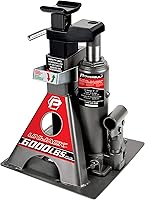
A bottle jack has a more compact shape, but its starting height and contact arrangement must suit the vehicle. Our bottle jack vs floor jack comparison covers those tradeoffs.
If you are choosing equipment for several cars, map the lowest clearance and highest required lift first. Then compare tools that cover both ends of that range.
Our guide to floor jacks for a home garage can help you build that shortlist. Keep carrying frequency, floor space and storage access beside the vehicle measurements.
Aluminum vs steel floor jack: the final decision
Choose your aluminum vs steel floor jack by the job it must complete, then choose the handling weight you can manage. Use these decision rules to narrow the three options.
- Choose SATA if you want aluminum construction in the larger capacity class and its measured fit works for your vehicle. Confirm its carry weight if transport is the main reason for buying it.
- Choose ARCAN if the jack will stay on a garage floor and you value its reinforced chassis and positioning features. Resolve the saddle-height question before choosing it for a low car.
- Choose BIG RED if its smaller capacity and lower lift ceiling cover your work, and frequent carrying makes its weight and side handle useful.
Before ordering, write down your required capacity, lift-point clearance, needed height and storage route. If none of these models meets all four needs, widen the search with our best floor jacks guide.
Frequently asked questions
Is an aluminum floor jack better than a steel one?
Aluminum is often the better choice for frequent carrying, while steel suits a jack that stays on a garage floor. Choose the exact model by capacity, clearance and lift height first; then compare its weight, carry handles and storage needs rather than choosing by frame material alone.
Are aluminum floor jacks strong enough?
Yes, an aluminum floor jack can handle loads within its rated capacity when used as instructed; aluminum construction does not set the capacity: the SATA here is rated for 3 tons. Use the approved lift points, stay within the jack's limit and transfer the vehicle onto suitable stands.
Do steel floor jacks last longer than aluminum?
Steel alone does not guarantee a longer service life; frame condition, hydraulic seals, storage and maintenance all affect how long a jack remains usable. Keep either material clean and dry, inspect it before use, and remove a jack from service if it leaks, bends or lowers unexpectedly.
Can an aluminum floor jack lift an SUV?
Yes, if the exact jack has enough capacity, fits under the approved lift point and reaches the required height; SUV ground clearance alone does not settle the choice because suspension travel affects the lift needed. Check the vehicle and jack manuals, then use suitable stands before working underneath.