Bottle Jack vs Floor Jack: Which Is Better? (November 2026)
In a bottle jack vs floor jack comparison, choose a bottle jack for compact storage or a floor jack for routine garage work. Check clearance, lift range, saddle fit and capacity, then plan how to support the vehicle.
On this page (10 sections)
- Bottle jack vs floor jack: what changes in use?
- How do you check clearance and lifting reach?
- Which jack capacity do you need?
- Which of these jacks suits your work?
- How should you set up either jack?
- Can either jack hold a vehicle during repairs?
- What storage and care does each style need?
- Which common buying mistakes should you avoid?
- FAQ
- Bottle jack vs floor jack: which should you buy?
Choose a bottle jack for compact storage and suitable short lifts, or a floor jack for frequent garage lifting. The bottle jack vs floor jack decision starts with your vehicle's lift points, clearance and required height.
A bottle jack places an upright hydraulic ram beneath the load. A floor jack uses a rolling frame and lifting arm, which usually makes positioning easier on a smooth garage floor.
Neither style replaces a support plan. Decide where the vehicle will rest during the repair before choosing how to raise it.
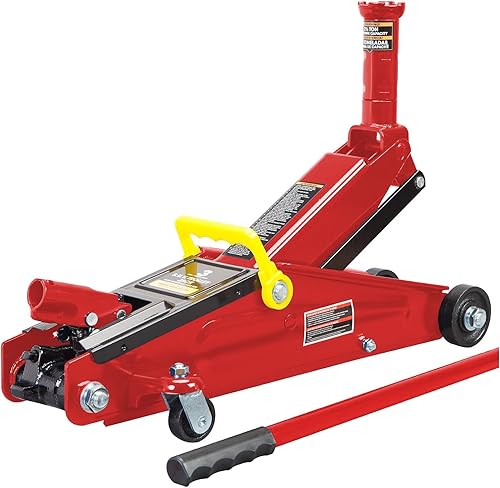 Best for home garage lifting
BIG RED Trolley Floor Jack with Extra Saddle
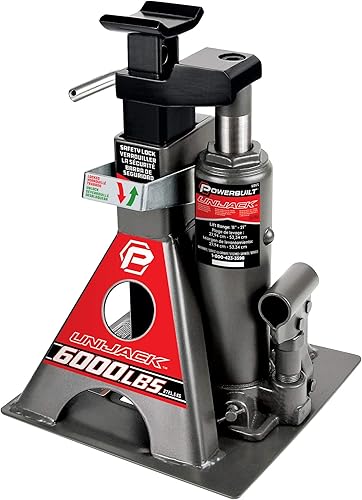 Best for high-clearance vehicle support
Powerbuilt 3 Ton Bottle Jack and Jack Stands in One
Bottle jack vs floor jack: what changes in use?
The main difference is how each jack fits and moves beneath the vehicle. A bottle jack needs space for its upright body, while a floor jack needs room for its frame, handle and rolling movement.
A bottle jack raises its ram vertically. Its base stays in place, so correct alignment between the base, saddle and lifting point matters throughout the lift.
A floor jack's lifting arm moves through an arc. Its wheels must remain free to roll as the saddle rises; blocking them can interfere with the jack's movement beneath the load.
Bottle jack vs floor jack for repeated jobs
A floor jack usually suits repeated wheel and brake work in a home garage. You can roll it between approved lifting points instead of carrying and repositioning an upright jack each time.
A bottle jack suits buyers who need compact storage and have a compatible lifting point within reach. Skip either style if its shape forces you to use an unapproved point.
How do you check clearance and lifting reach?
Check starting height, maximum height and saddle access before comparing capacity. A jack can fit under the vehicle yet run out of travel before completing the lift.
Measure at the approved lifting point, not the bumper or side skirt. Also check the path beneath the vehicle, since a low saddle is little help if the frame cannot pass underneath.
For roadside use, consider clearance with a flat tire. A jack that fits comfortably when the tire is inflated may no longer slide into position.
Maximum saddle height is not the same as tire clearance. Suspension movement can consume part of the lift before a wheel leaves the ground, especially when lifting from a body or frame point.
An adjustable extension screw takes up some of the initial gap. It does not create extra hydraulic travel or permit you to exceed the jack's maximum height.
If your car sits low, compare actual dimensions in our guide to what a low-profile floor jack is. Never solve a clearance problem by moving the saddle onto a nearby panel or suspension part without vehicle approval.
Which jack capacity do you need?
Use a jack whose capacity meets the vehicle's lifting requirements, following both manuals. Do not size it by dividing vehicle weight evenly among 4 wheels.
Weight is not always spread evenly, and a central lifting point may raise more than one corner. Vehicle load, lift location and the planned task all affect the choice.
Use the vehicle manual and weight information to establish what you need. Our guide to what size floor jack you need explains the checks to make before choosing a rating.
Extra capacity cannot fix poor fit or insufficient reach. A high-capacity bottle jack may still be unsuitable for a low car or a truck that needs more lifting height.
Which of these jacks suits your work?
The BIG RED suits routine garage lifting, the Powerbuilt suits compatible high-clearance vehicles needing combined support, and the Pro-Lift suits heavy loads requiring a short lift. Choose among them by fit and task rather than tonnage alone.
The comparison below puts their capacity, lift range and design side by side.
| Product | Best for | Capacity | Lift range | Style | Our score |
|---|---|---|---|---|---|
| BIG RED Trolley Floor Jack with Extra Saddle | home garage lifting | 3 tons (6,000 lb) | 5.88 to 20.88 in | Trolley floor jack | 9.0 |
| Powerbuilt 3 Ton Bottle Jack and Jack Stands in One | high-clearance vehicle support | Confirm before use: conflicting 3,000 and 6,000 lb specifications | 11 to 21 in | Bottle jack with built-in stand | 8.5 |
| Pro-Lift 20 Ton Hydraulic Bottle Jack | short-lift heavy loads | 20 tons | 6.5 to 11 in | Bottle jack | 8.1 |
BIG RED: for routine garage work with rolling access
The BIG RED offers a 3 ton capacity and a 5.88 to 20.88 in lifting range. Its extra-long saddle neck makes it worth considering for higher vehicles when the saddle and approved lift point match.
Its steel and swivel casters help position the jack on a suitable floor. Leave enough room for the 24.5 in handle to pump without striking the bodywork or garage wall.
At 36 lb, it suits a garage where you can roll it more often than carry it. Skip it for a low car whose lifting point sits below its starting height, or where storage requires frequent lifting up stairs.
Powerbuilt: for compatible high-clearance support points
The Powerbuilt combines a bottle jack and stand with a ratcheting safety bar. It suits a buyer who wants lifting and mechanical support in the same unit at an approved location.
Its 11 to 21 in range requires substantial starting clearance. Skip it for low cars, and check that the vehicle permits lifting and supporting at the point where the unit will sit.
Powerbuilt gives conflicting 3,000 lb and 6,000 lb capacity figures for this model. Confirm the exact unit's label and manual with Powerbuilt before relying on either figure.
The wide base does not make soft or sloped ground a suitable repair area. Engage its support mechanism exactly as instructed before relying on it to hold the vehicle.
Pro-Lift: for heavy loads needing limited reach
The Pro-Lift pairs a 20 ton capacity with a 6.5 to 11 in range. That combination suits heavy lifting where the approved point is close enough to the ground and the required rise is modest.
Its extension screw helps close the starting gap, and its carrying handle helps with moving the compact body. The bypass system protects against ram overtravel; it does not turn the jack into a support stand.
Skip this model when suspension movement or stand placement requires more height. Its capacity is not a reason to choose it over a jack with the reach your vehicle needs.
How should you set up either jack?
Set up on a firm, level surface with the correct lifting and support points identified. Read the vehicle, jack and stand instructions before placing equipment beneath the vehicle.
- Park as the vehicle manual directs, secure it against movement and chock the wheels that will remain on the ground.
- Inspect the jack for leaks, damage, loose parts and a damaged saddle before loading it.
- Position the saddle at the approved lift point, using only an adapter approved for the jack and vehicle where required.
- Raise slowly, checking that contact stays centered and the base or wheels behave as intended.
- Stop at the required height and transfer the load to suitable mechanical supports as instructed.
Keep people clear during lifting and lowering. Never reach underneath to adjust the saddle while it carries the vehicle.
A floor jack needs a clear rolling path; a bottle jack needs its full base seated flat. Loose bricks, stacked scraps and improvised saddle extensions are not fixes for poor fit.
Before lowering, remove tools and make sure everyone is clear. Operate the release control gradually as the jack manual directs.
Can either jack hold a vehicle during repairs?
A hydraulic jack alone must not support a vehicle while you work underneath. Use suitable mechanical support at approved points, even for a job you expect to finish quickly.
Separate stands need enough height and capacity for the planned setup. Leave room to position them before lifting, since a jack occupying the only approved support point can create a problem.
A combined jack-and-stand unit also needs a compatible location. Its locking support must engage as instructed; hydraulic pressure alone is not the support mechanism.
Read how many jack stands you need to plan the whole setup. Never crawl underneath to find a stand location after raising the vehicle.
What storage and care does each style need?
Store either jack clean, dry and in the position its manual requires. Compact storage helps only if the jack remains accessible and you can move it without dropping or dragging it.
A bottle jack generally needs less floor space. A rolling floor jack needs a larger storage spot and a clear route to the vehicle, so include the handle when checking your garage layout.
Wipe away dirt and inspect the saddle, base or wheels after use. Follow the manual's lubrication schedule, and keep the ram and moving parts protected from dirt and corrosion.
Use only the hydraulic fluid specified for the jack. Our guide to floor jack oil explains why choosing fluid by appearance or using a convenient substitute can cause problems.
If lifting becomes uneven or spongy, stop and check the manual's service steps. Air may require bleeding, but persistent sinking or leaking needs attention before further use; see how to bleed a floor jack.
Which common buying mistakes should you avoid?
Avoid buying by capacity or vehicle type alone. The right jack must fit the lifting point, reach the required height and work with your support setup.
- Assuming every floor jack fits low cars. Starting height varies, and the frame must also clear the approach path.
- Assuming every bottle jack suits trucks. A short ram may run out of reach before the tire clears the ground.
- Choosing by storage size alone. Check saddle fit, handle access and how you will position the unit.
- Treating a wide base as permission to use soft ground. Move to a suitable work surface.
- Buying stands afterward. Plan lifting and support together so the equipment fits the approved points.
For a garage used for frequent repairs, start with our best floor jacks for a home garage. Compare fit and handling needs before adding capacity you may not need.
FAQ
The answers below focus on fit, reach and support, which decide whether either style suits your vehicle.
Is a bottle jack better than a floor jack?
A bottle jack is better for compact storage and suitable short-reach lifting jobs; a floor jack is usually more convenient for repeated garage work. Choose by clearance, saddle fit, lift range and capacity, then check that your work area and support plan suit the vehicle.
Can a bottle jack lift a car?
Yes, a bottle jack can lift a car when it fits beneath an approved lifting point and has enough capacity and reach. Check clearance with a flat tire if roadside use is your goal.
Never put any part of your body beneath a car supported only by hydraulic pressure.
Are floor jacks safer than bottle jacks?
Neither style is automatically safer. A floor jack needs room for its wheels to move, while a bottle jack needs a flat base and correctly centered contact.
Both require a firm, level surface, approved lift points and mechanical support before anyone works beneath the vehicle.
Can you use a bottle jack on an SUV?
Yes, if the bottle jack fits the SUV's approved lifting point and meets its lifting requirements. Higher ground clearance helps with access, but suspension travel can use up the available lift before a tire leaves the ground.
Check reach and support height rather than choosing by vehicle type alone.
Do I need jack stands with a floor jack?
Yes, use properly rated jack stands before working underneath a vehicle raised by a floor jack. Place them at the vehicle's approved support points and transfer the load as instructed.
A combined jack-and-stand unit is a separate option only where its manual and the vehicle's instructions allow.
Bottle jack vs floor jack: which should you buy?
Choose a floor jack for frequent garage lifting when you have a smooth floor, rolling space and suitable clearance. Choose a bottle jack for compact storage or a specific heavy lifting task when its saddle, height range and base fit the job.
Among these options, the BIG RED suits general garage use, the Powerbuilt suits compatible high-clearance support points, and the Pro-Lift suits short lifts of heavy loads. Rule out any model that fails one fit or support requirement.
Before ordering a rolling jack, read trolley jack vs floor jack to understand the overlapping names. Then choose by the measured lift point and the repair you need to complete.
Frequently asked questions
Is a bottle jack better than a floor jack?
A bottle jack is better for compact storage and suitable short-reach lifting jobs; a floor jack is usually more convenient for repeated garage work. Choose by clearance, saddle fit, lift range and capacity, then check that your work area and support plan suit the vehicle.
Can a bottle jack lift a car?
Yes, a bottle jack can lift a car when it fits beneath an approved lifting point and has enough capacity and reach; check clearance with a flat tire if roadside use is your goal. Never put any part of your body beneath a car supported only by hydraulic pressure.
Are floor jacks safer than bottle jacks?
Neither style is automatically safer; a floor jack needs room for its wheels to move, while a bottle jack needs a flat base and correctly centered contact. Both require a firm, level surface, approved lift points and mechanical support before anyone works beneath the vehicle.
Can you use a bottle jack on an SUV?
Yes, if the bottle jack fits the SUV's approved lifting point and meets its lifting requirements; higher ground clearance helps with access, but suspension travel can use up the available lift before a tire leaves the ground. Check reach and support height rather than choosing by vehicle type alone.
Do I need jack stands with a floor jack?
Yes, use properly rated jack stands before working underneath a vehicle raised by a floor jack; place them at the vehicle's approved support points and transfer the load as instructed. A combined jack-and-stand unit is a separate option only where its manual and the vehicle's instructions allow.