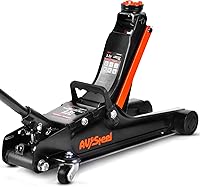
How Does a Floor Jack Work?
How does a floor jack work? A hand pump moves oil under pressure into a cylinder, extending a ram that raises the saddle; use jack stands to support the vehicle before going underneath.
On this page (8 sections)
- How does a floor jack work step by step?
- What parts make a floor jack lift?
- What happens when you lower a floor jack?
- Which measurements matter before you buy?
- Which floor jack features fit different vehicles?
- What common mistakes should you avoid?
- How do you care for a floor jack that won't lift properly?
- How does a floor jack work best for your vehicle?
A floor jack works by using hydraulic pressure to multiply your handle force and raise a vehicle at an approved lifting point. To understand how a floor jack works, follow the oil: pumping sends it into a cylinder, and opening the release valve lets it return.
The jack raises the vehicle; jack stands support it during under-car work. Choosing the right jack also means checking clearance, reach, capacity, and the space available to move its handle.
How does a floor jack work step by step?
A floor jack lifts when each handle stroke pushes oil into its lifting cylinder. Pressure extends a ram, which moves the lifting arm and saddle upward.
- Park on hard, level ground and secure the vehicle against rolling as its manual directs, including using wheel chocks.
- Identify approved lifting and stand locations before positioning equipment.
- Inspect the jack for leaks, damage, loose parts, and wheels that won't move freely.
- Position the saddle under the lifting point and close the release valve according to the jack manual.
- Pump until the saddle makes contact, then check its alignment before raising the vehicle farther.
- Place suitable stands at approved support points and slowly lower the vehicle onto them.
Lift only as high as the job requires. Keep your body clear while positioning equipment, and follow the stand instructions for confirming secure support.
What parts make a floor jack lift?
The pump, oil, cylinder, and ram create lifting force, while the arm and saddle transfer it to the vehicle. The release valve controls the return flow during lowering.
The handle provides leverage to drive a small pump piston. A reservoir stores oil, and one-way valves direct it toward the lifting cylinder and prevent it from flowing backward between strokes.
The saddle must match the vehicle's lifting point, including any adapter required by the vehicle maker. A saddle placed under a thin floor panel or an unapproved suspension part can cause damage or slip.
How does a floor jack work with such a small pump?
Hydraulic pressure acts across the larger lifting piston, producing more force over less travel. Repeated strokes supply the oil volume needed to raise the ram.
A dual-piston pump can reduce the number of strokes needed, but it doesn't increase the jack's rated capacity. Never extend the handle with a pipe to force a lift.
The lifting arm travels through an arc, so a trolley jack needs room to roll slightly as it rises. Don't wedge its wheels against an obstacle or use it where they sink into the surface.
What happens when you lower a floor jack?
Opening the release valve allows oil to return to the reservoir, letting the loaded saddle descend. Turn the control slowly as directed by the jack manual, since opening it too far can cause rapid lowering.
To remove stands, first raise the vehicle enough to take the load off them. Remove them while keeping clear, then check that people, tools, and loose parts are out of the lowering path.
Don't remove or unscrew the release valve beyond its operating instructions. Stop using a jack that won't lower predictably or loses height with the valve closed.
Which measurements matter before you buy?
Match capacity, entry clearance, and maximum lift to the vehicle before comparing pump speed or materials. A jack can have enough capacity yet fail to fit beneath the lifting point or raise it high enough.
Measure clearance along the jack's approach path, not just beneath the bumper. A flat tire reduces clearance, so consider that situation if tire changes are part of your plan.
Maximum saddle height must allow the approved support points to reach your stands. Suspension movement can use up lift before a wheel leaves the ground, especially on taller vehicles.
Check handle clearance and how far the saddle must reach under the car. Low entry height alone doesn't tell you whether the jack's frame will clear the bodywork along that path.
Use what size floor jack you need to compare capacity and lifting range. Don't assume every jack carries only one-quarter of the vehicle's weight, since load depends on the lifting point and vehicle layout.
Which floor jack features fit different vehicles?
Choose the jack that fits your lifting points and storage routine. These 4 models offer different combinations of entry height, construction, and movement around the garage.
BIG RED: for taller lifting points
The BIG RED suits owners of higher vehicles whose approved lifting points need extra reach upward. Its extra-long saddle neck and 20-7/8 in maximum lift make it worth considering for that job.
Its steel construction weighs 36 lb, and a carrying handle helps when moving it between storage and the work area. The single-piston pump is a straightforward choice for occasional lifting.
Skip it if a low car doesn't provide enough entry clearance. An extra saddle neck also doesn't make every truck compatible, so confirm the lifting point and required height first.
ARCAN: for a dedicated garage space
The ARCAN suits buyers who can roll their jack around a garage and leave it there. Reinforced steel side plates, wiper seals, and a long handle support that use.
At 76.8 lb, it's a poor match for someone who must carry a jack up steps or load it into a vehicle often. Wide front wheels and ball-bearing rear casters help with floor positioning.
Confirm its entry height before buying for a low car. ARCAN describes a low-profile frame, but its specifications also give a 7.5 in minimum height, so resolve that conflict for the exact model before ordering.
Yellow Jacket: for low cars and frequent setup
The Yellow Jacket suits buyers who want low entry clearance with a dual-piston pump for repeated setup. Its steel-and-aluminum construction weighs 58.6 lb, so plan to roll it whenever possible.
The maximum lift is 18-5/16 in, while a rubber saddle and foam handle bumper provide contact protection. Those features don't replace correct saddle placement or a required lifting adapter.
Skip it if your support-height calculation needs more lift. Read what a low-profile floor jack is if you're comparing under-car access.
SATA: for low entry and aluminum construction
The SATA suits buyers seeking an aluminum jack with low entry clearance and more upper reach than the Yellow Jacket. Its maximum height is 19-1/8 in, and it uses a dual-piston pump.
It also has an overload protection valve and a slow-release system for controlled lowering. Operate that control gradually even with a slow-release design.
Skip it if you need confirmed carrying weight before choosing, since aluminum construction alone doesn't tell you how manageable it will be. For more options suited to restricted clearance, see best low-profile floor jacks.
What common mistakes should you avoid?
The biggest mistakes are poor ground support, wrong lifting points, and relying on hydraulic pressure alone. Avoiding them matters more than choosing a faster pump.
Don't lift on gravel, soil, a slope, or a soft surface where the wheels or stands can sink. Move the vehicle to a suitable work area before starting.
Don't treat an overload valve as permission to push beyond capacity. It protects the jack's hydraulic system, but it doesn't correct bad positioning or unsuitable ground.
Plan where stands will go before the jack occupies a lifting point. If the vehicle manual doesn't give a workable lifting and support arrangement, get suitable guidance before raising it.
A floor jack doesn't replace stands even for a short task. Use how many jack stands you need to plan support for the work rather than buying stands after lifting.
How do you care for a floor jack that won't lift properly?
Start with the manual's valve, oil, and air checks, and stop using a jack that leaks or loses height. Never search for a fault while you're beneath a vehicle supported by it.
An open release valve can prevent pressure from building. Trapped air or an incorrect oil level can also cause poor lifting, but the right service procedure varies by model.
Follow how to bleed a floor jack alongside your jack's instructions. Use the specified hydraulic fluid, keep dirt out of the filler opening, and don't substitute brake fluid.
For routine care, wipe away dirt, inspect the saddle and wheels, and lubricate only the points named in the manual. Store the jack lowered as instructed, and use the floor jack oil guide before topping it up.
How does a floor jack work best for your vehicle?
A floor jack works best when its range fits the car and its handling fits your workspace. Choose BIG RED for higher lifting points, Yellow Jacket for low access and frequent setup, or SATA for low entry with aluminum construction.
Consider ARCAN for a dedicated garage only after confirming its entry height. Then check the full lifting plan, including stand locations, ground conditions, and handle space.
Use the floor jack sizing guide to confirm fit, or which floor jack to buy to narrow the choice around your vehicle and routine.
Frequently asked questions
How does a hydraulic floor jack lift a car?
A hydraulic floor jack pumps oil into a cylinder, where pressure extends a ram and raises the lifting arm; the saddle transfers that force to an approved vehicle lifting point. Opening the release valve lets oil return to the reservoir so the vehicle can descend.
Where does the force come from in a floor jack?
Your effort on the handle drives a small pump piston, creating pressure in the hydraulic oil; that pressure acts on a larger lifting piston to produce greater force. The tradeoff is travel: repeated handle strokes move enough oil to raise the load a short distance.
Can you work under a car held up by a floor jack?
Never work under a car supported only by a floor jack; a leak, mechanical fault, or movement can let the vehicle fall. Lower it onto properly rated jack stands at approved support points, following the vehicle and stand instructions, before putting any part of your body underneath.
Why won't my floor jack lift the car?
An open release valve, excessive load, trapped air, low oil, or a damaged hydraulic component can prevent lifting. Start with the checks in your jack's manual and keep the vehicle supported safely; stop using a jack that leaks, loses height, or still behaves unpredictably after the prescribed checks.