MaxxHaul 50709 Extendable Car Ramps Review: Worth It? (November 2026)
Our MaxxHaul 50709 review favors it for jobs where removable approach sections improve access. Choose it if you'll use that feature or compatible extensions; choose a shorter pair if routine maintenance and compact storage matter more.
On this page (10 sections)
- The MaxxHaul 50709 review at a glance
- What are the 50709's capacity and dimensions?
- How does the detachable and extendable design work?
- Does the 50709 fit your car and work area?
- How should you set up and use the 50709?
- How does it compare with the shorter alternatives?
- Which jobs suit ramps, and when are stands better?
- How should you care for the ramps between jobs?
- What mistakes should you avoid with the 50709?
- MaxxHaul 50709 review: which ramps should you choose?
This MaxxHaul 50709 review recommends the ramps for buyers who will use their removable approach sections or optional extensions. For routine maintenance in a tight garage, a shorter pair is the more practical choice.
The key buying question is where you need working space. Removing an approach section can open an access path beneath the vehicle, but the complete ramp setup still needs enough clear floor space for driving on and off.
The MaxxHaul 50709 review at a glance
The 50709 makes sense when sectional flexibility solves a specific access problem. Skip it if you only need wheel-supported access for oil changes and have no use for removable runners.
MaxxHaul 50709 Extendable Car Ramps: Best for flexible garage layouts
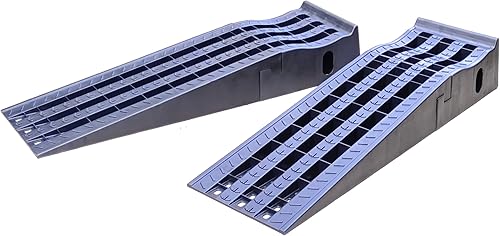
- 6,500 lb per pair
- 6-1/2 in maximum lift
- Detachable sections
- Extensions sold separately
Choose this set when removing the approach sections would improve working access or when you need compatible extensions. Allow room for its longer footprint and for storing the detached pieces.
Pros
- Removable runners can free working space
- Accepts separately sold sectional extensions
- Built-in side handles
Cons
- Extensions cost extra
- Long footprint needs planning
- About 33 lb per pair
Built-in side handles help you position the pieces, and the polypropylene construction keeps the set portable. At about 33 lb per pair, though, it deserves a reachable storage spot rather than a high shelf.
What does this MaxxHaul 50709 review favor?
The strongest reason to choose it is access around the ramp after the vehicle is securely positioned. Picture where you'll place your drain pan, tools and body before deciding whether removing a runner would help.
An extension option serves a different need: changing the overall approach layout. Buy compatible extensions only when you know why the standard arrangement won't fit your setup, and account for the extra floor and storage space.
What are the 50709's capacity and dimensions?
Use 3,250 lb per ramp and 6,500 lb per matched pair as the capacity limits. Both apply, and neither the vehicle's size nor an evenly parked appearance tells you the actual load on each ramp.
| Detail | MaxxHaul 50709 Extendable Car Ramps |
|---|---|
| Capacity | 3,250 lb per ramp; 6,500 lb per pair |
| Maximum lift | 6-1/2 in |
| Ramp incline | 9.5° |
| Maximum tire width | 15 in |
| Overall dimensions | 52-1/2 x 15 x 8-1/2 in |
| Material | Polypropylene |
| Pair weight | About 33 lb |
| Set | 2 ramps |
MaxxHaul's description also contains a higher capacity figure that conflicts with its explicit operating limits. Don't use the higher figure to justify a heavier load; resolve conflicting instructions or markings with MaxxHaul before use.
A pair capacity isn't a gross vehicle weight allowance. Weight distribution matters, and the load can differ between the front and rear of the same vehicle.
Use vehicle weight information and the ramp instructions to establish suitability. If you can't confirm the supported load, choose equipment with clear, adequate limits rather than estimating from curb weight alone.
How does the detachable and extendable design work?
The runner connects to the front section through tabs and notches, which must seat correctly before use. Removable runners can clear working space, while separately sold sectional extensions add overall length.
Lay out both ramps before assembly so you can check that the pieces match. Inspect the joints for debris or damage, and follow MaxxHaul's directions for seating each connection.
Don't assume that a removable part may be pulled away at any point during use. Follow the specified sequence for removing and refitting sections, and never disturb a load-bearing part beneath an occupied ramp.
Keep both sides in matching configurations. Don't improvise extensions from lumber, combine unrelated ramp parts or assume that adding length increases capacity or lift height.
Does the 50709 fit your car and work area?
The 50709 fits only when tire width, approach clearance, working clearance and floor space all check out. A suitable load capacity won't prevent a low bumper from contacting the approach.
Start with the vehicle's lowest parts near the ramp path. Front splitters, underbody panels and side skirts may need attention, especially if the vehicle has been lowered or fitted with body accessories.
The ramp angle is a useful reference, but bumper overhang also affects clearance. Our guide to car ramps for low cars explains how those measurements work together.
Next, consider the space you'll have after the tires reach the platforms. Overall ramp height isn't the same as lift height, and the usable room beneath your car also depends on its starting clearance.
Allow space for your shoulders, tools and drain pan rather than checking whether you can simply slide underneath. A creeper also takes up some of that space.
Finally, measure the approach area with the garage door, parked vehicles and stored items in mind. You need a straight path for both wheels and enough room to drive off without turning while still on the ramps.
Use our best car ramps guide if these checks point toward a different shape or footprint.
How should you set up and use the 50709?
Set up the matched pair on a hard, level, nonslippery surface that can support the load. MaxxHaul excludes uneven ground, slopes, dirt, grass, sand, gravel and other loose or unstable surfaces.
Concrete still needs inspection. Oil, loose grit, damage or a slope can make an otherwise solid-looking work area unsuitable.
Before driving onto the ramps:
- Read the ramp and vehicle instructions, including any limits on the work you plan to do.
- Inspect the ramps, connections and tire-contact areas for damage and debris.
- Assemble matching configurations and align both ramps with the wheels on the same axle.
- Check the tire paths, approach clearance and room to drive off.
- Keep people, pets and loose tools out of the vehicle's path.
Drive slowly and smoothly, keeping the wheels straight. A spotter can help with alignment from a safe position outside the vehicle's path, but should never stand in front of or behind it.
If a ramp moves, a tire climbs off-center or the vehicle contacts a section, stop the approach. Don't reach beside a moving wheel to reposition anything; return to a safe starting position and correct the setup.
Once parked, follow the equipment instructions for securing the vehicle, including the parking brake and wheel chocks on the wheels remaining on the ground. Confirm correct tire placement before anyone goes underneath.
Our car ramp safety guide explains the checks in more detail. Refit any removed approach sections as directed before driving off.
How does it compare with the shorter alternatives?
Choose a shorter pair when ordinary underbody access matters more than removable runners. All four options have the same stated per-ramp and pair capacity limits, so this comparison turns on fit, handling and storage.
| Alternative | Length | Lift height | Main reason to choose it |
|---|---|---|---|
| MaxxHaul 50515 | 35-1/2 in | 6.25 in | Routine maintenance without sectional setup |
| MaxxHaul 50947 | 35.63 in | 6.7 in | Stackable storage |
| Amazon Basics Low Profile | 35.51 in | Confirm before choosing | Basic maintenance with suitable tires |
MaxxHaul 50515: for routine oil changes
The MaxxHaul 50515 Car Ramps, 6.25 Inch Lift suit buyers who want a shorter footprint and don't need removable approach sections. Rubber base stops and a ridged traction surface are useful positioning features, though they don't replace a clean, suitable floor.
The pair weighs about 20.1 lb, making it lighter to move than the 50709. Skip it if your planned access depends on removing the approach or using sectional extensions.
MaxxHaul 50947: for crowded storage areas
The MaxxHaul 50947 Stackable Car Ramps suit a garage where ramps need to stack away between jobs. Side handles and an 18.9 lb pair weight also help when carrying them from storage.
Their lift is only slightly greater than the 50709's, so don't choose them expecting a large change in working room. Stacking is for storage, never a way to increase operating height.
Amazon Basics: for basic garage upkeep
The Amazon Basics Low Profile Car Ramps suit straightforward maintenance when their shorter footprint fits your garage. They have rubber base stops, a textured traction surface and a maximum tire width of 12 in.
Each ramp weighs about 9.24 lb, which may make individual pieces easier to carry. Skip this pair if your tires exceed its width limit, and confirm usable lift height before buying for a tight-clearance task.
The low-profile name doesn't guarantee bumper clearance. Measure your vehicle's approach rather than treating the name as a fit guarantee.
Which jobs suit ramps, and when are stands better?
Ramps suit work that leaves the wheels installed and supported, such as many oil changes and visual underbody checks. They aren't a substitute for the lifting and support arrangement required for wheel removal.
Check the vehicle's service procedure before choosing equipment. Some tasks need the vehicle level, access to a specific support point or a different arrangement from raising one axle on ramps.
Don't assume every repair is suitable just because you can reach the part. Work that changes vehicle balance or involves major components needs the support method specified for that job.
Our car ramps vs jack stands guide helps you choose between wheel-supported access and support at approved vehicle points.
If you're considering combining equipment, read whether you need jack stands with ramps. Don't place stands wherever they happen to fit, and never work beneath a vehicle supported only by a jack.
How should you care for the ramps between jobs?
Keep the ramps clean, dry and easy to inspect so damage or loose debris doesn't hide until the next use. Pay particular attention to the 50709's connecting tabs and notches.
Remove grit from the joints without cutting, grinding or changing their shape. Use cleaning methods compatible with polypropylene and follow MaxxHaul's care instructions.
Inspect before every use for cracks, distortion, damaged connections or any other condition covered by the instructions. Stop using a damaged ramp rather than gluing, patching or modifying it.
Store the pieces where they won't be struck, crushed or mixed with unrelated ramp parts. Keep compatible extensions together and leave the handles accessible for the next setup.
What mistakes should you avoid with the 50709?
The biggest mistakes are choosing by capacity alone and skipping the complete setup check. Clearance, surface condition, alignment and the task itself matter just as much.
Don't treat base grip or tire traction as permission to use an oily floor. Likewise, don't use boards or blocks to compensate for uneven ground or add height.
Don't rush an approach because the tires appear nearly centered. Start over if alignment is wrong rather than steering sharply on the ramp.
For oil changes, plan both access and the service procedure before raising the car. Our guide to car ramps for oil changes covers choices for that specific job.
MaxxHaul 50709 review: which ramps should you choose?
Choose the 50709 when removable runners solve a real access problem or compatible extensions are part of a planned setup. If neither feature helps your work, the extra length and weight give you little reason to choose it.
Pick the 50515 for routine maintenance, the 50947 when stackable storage matters most, or Amazon Basics for basic upkeep after confirming tire fit and lift requirements.
The decision from this MaxxHaul 50709 review is to buy for your task and measured workspace. Use the best car ramps guide to compare alternatives once you've checked load, clearance and floor suitability.
Frequently asked questions
What is the lift height of the MaxxHaul 50709?
The MaxxHaul 50709 has a maximum lift height of 6-1/2 in, which is different from its overall height. Check that the resulting space will accommodate you, your tools and the task, and assess front bumper and underbody clearance before driving onto the ramps.
Can you extend the MaxxHaul 50709 ramps?
Yes, the 50709 accepts sectional extensions sold separately to increase overall ramp length. Confirm compatible parts and assembly directions with MaxxHaul, use matching configurations on both sides, and don't assume an extension increases load capacity or lift height; follow the limits for the complete assembly.
What is the capacity of the MaxxHaul 50709?
Use a limit of 3,250 lb per ramp and 6,500 lb per matched pair, consistent with MaxxHaul's explicit capacity instructions. Both limits apply at once, so total vehicle weight alone isn't enough to establish suitability; confirm the supported load and resolve any conflicting markings with MaxxHaul before use.
Can you use the MaxxHaul 50709 on gravel?
No, MaxxHaul rules out gravel and other loose or unstable ground, including dirt, grass and sand. The ramps require a hard, level, nonslippery surface capable of supporting the load, and a board laid over unsuitable ground is no reason to ignore those requirements.


